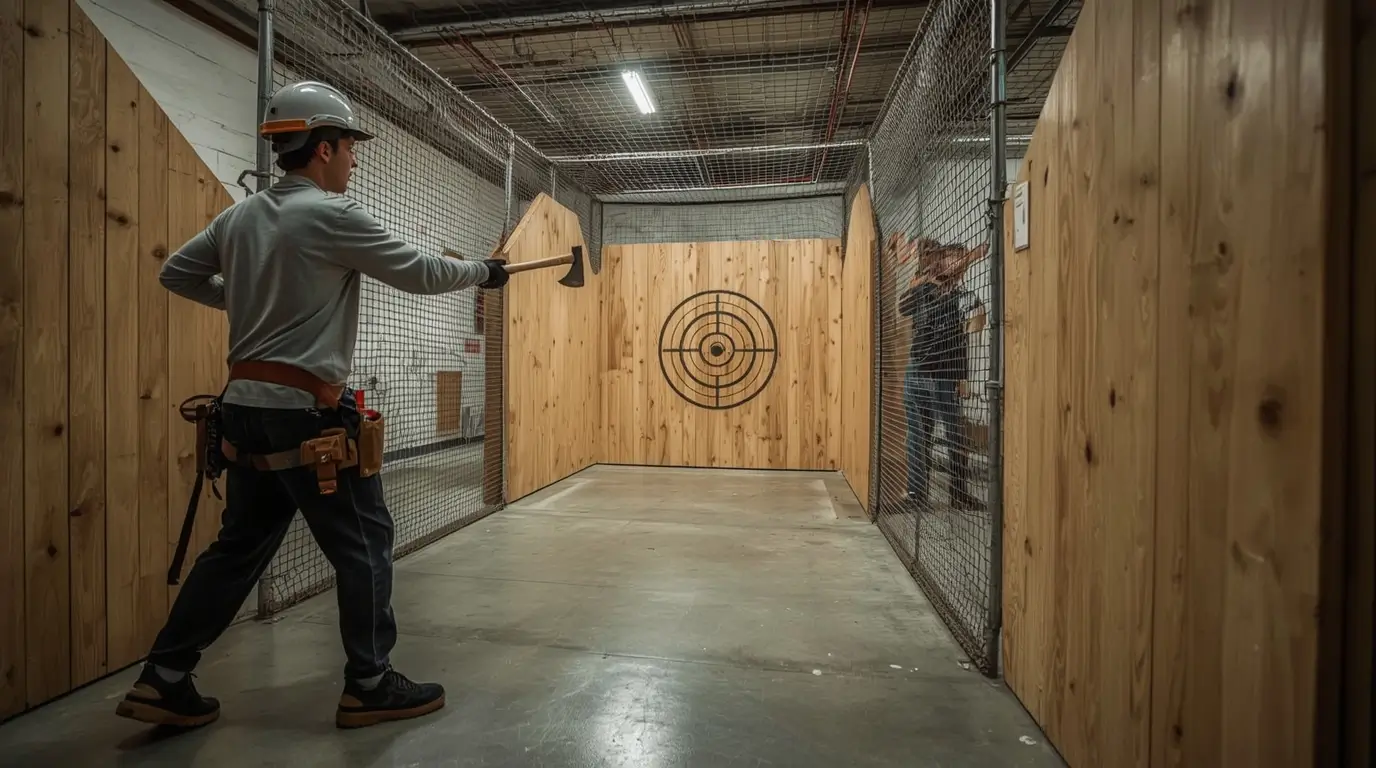
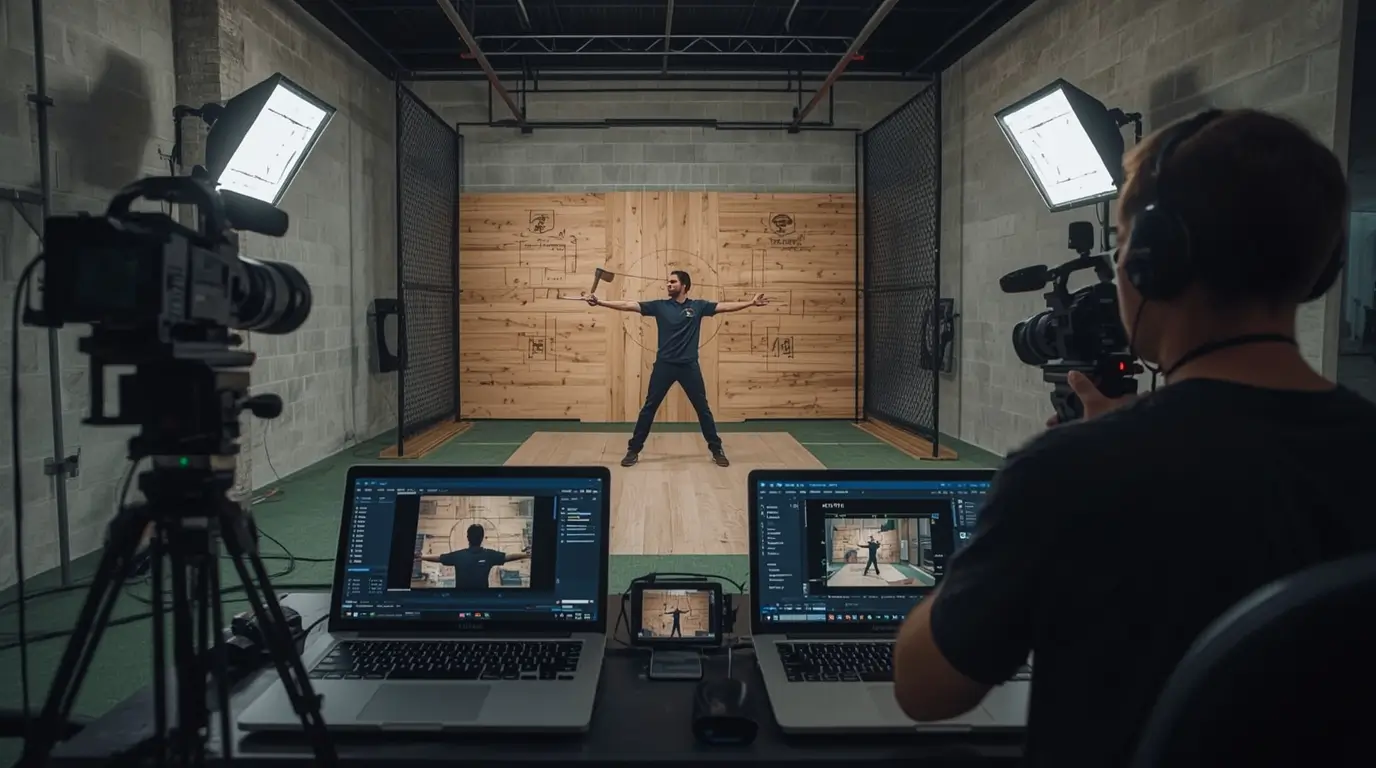
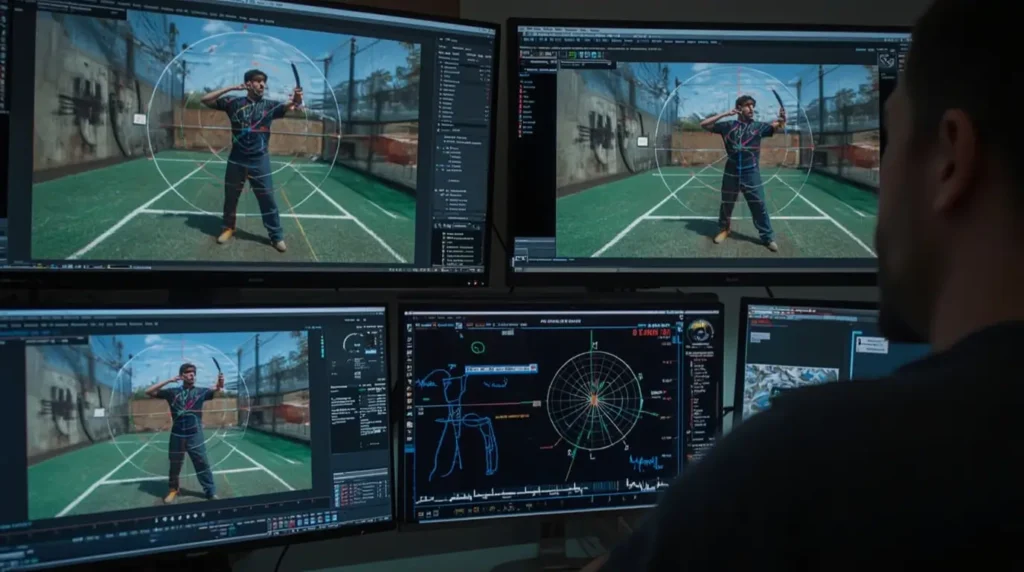
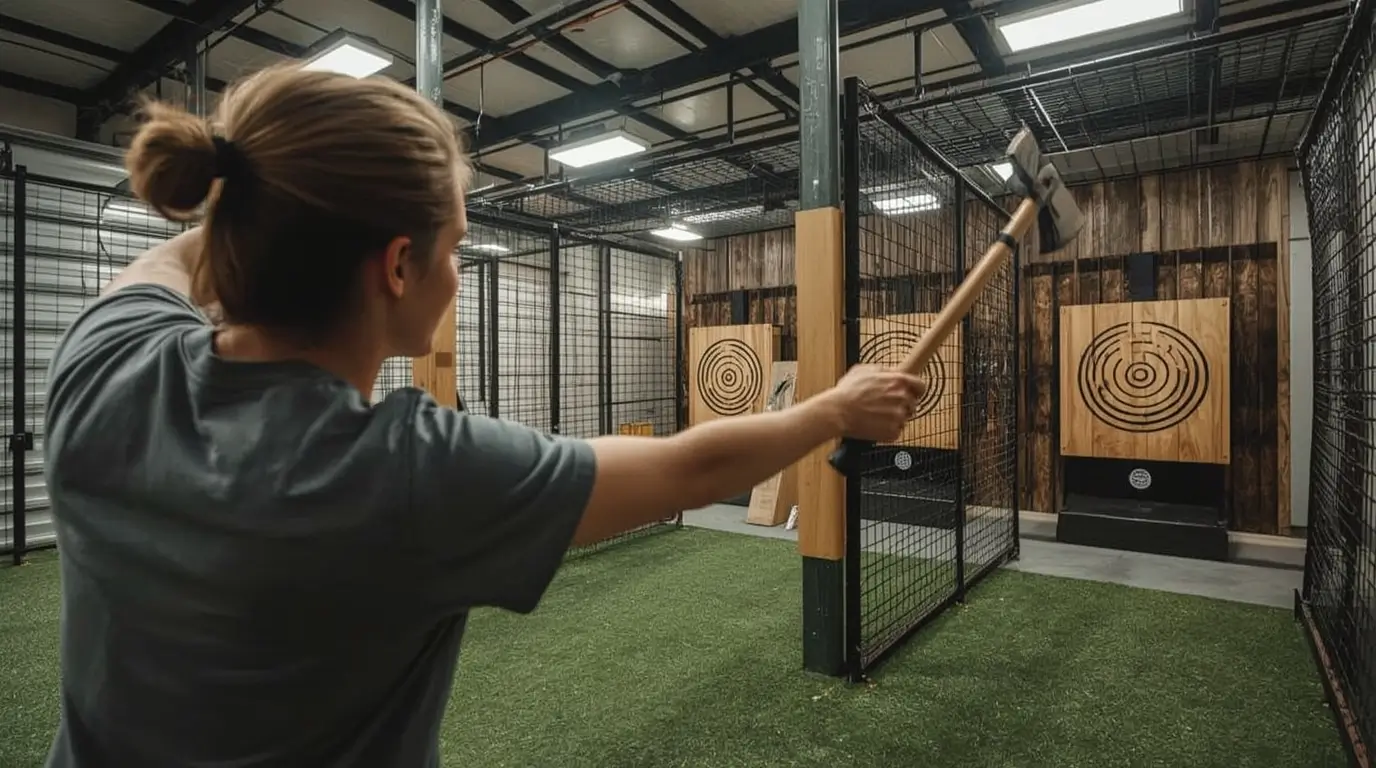
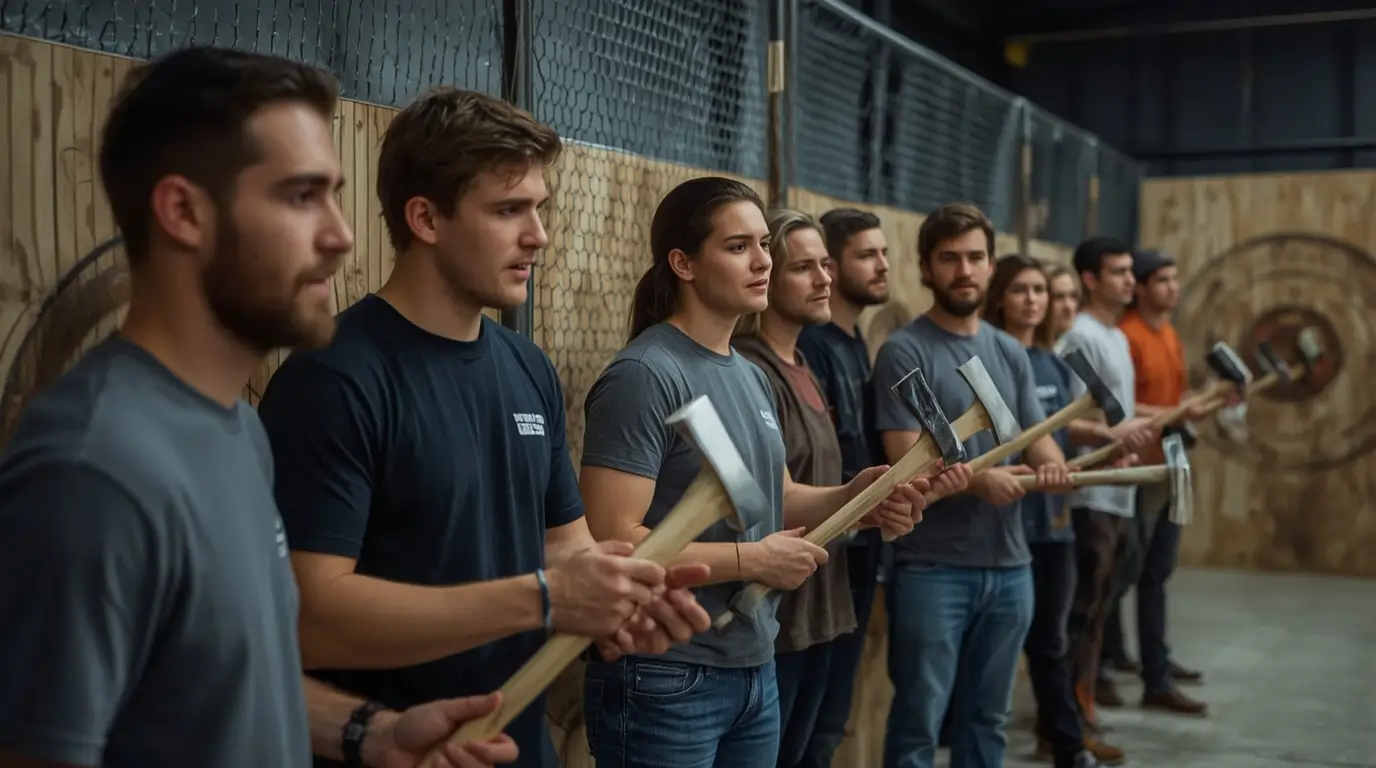
Revolutionise your progress withaxe throwing video analysis ! This scientific method used by champions radically transforms your technique. Discover how to make spectacular progress in axe-throwing, thanks to the secrets of filmed observation and the technical correction for axe throwing professional.
Video analysis: a revolution in learning to throw
Axe throwing with video analysis - Complete guide 2
Why Lancer Haches video analysis is revolutionising progression.
L'video analysis axe throwing represents the quantum leap in your technical development. Where the human eye captures only 15 % of crucial details, video reveals 100 % of your movements with millimetre precision.
Scientifically proven benefits:
Error detection Identification of 95 % technical faults invisible to the naked eye
Accelerated progress 3 x faster improvement than direct observation.
Gestural memory : long-lasting visual anchoring of corrections
Total objectivity elimination of subjective perceptual bias
Areas of analysis revealed by the video :
Micro-movements 0.1 second gesture details
Body asymmetries Invisible compensatory imbalances
Precise timing Synchronisation to one hundredth of a second.
Exact trajectories complete ballistic analysis
Optimum recording technologies
Recommended equipment by level :
Beginner - Basic Setup :
Smartphone 60 fps minimum, optical stabilisation
Angles full profile + face for 2D analysis
Distance 3-4 metres for optimum frame
Lighting natural or LED 3200 K minimum
Intermediate - Advanced configuration :
Sport camera 120 fps for detailed slow motion
Multi-angle 3 cameras (profile, front, 3/4 rear)
Motorised tripod automatic movement tracking
Synchronised audio real-time voice coaching
Expert - Professional configuration :
High-speed camera 240-1000 fps for micro-gestural analysis
Multi-camera system 5 + synchronised angles
Inertial sensors integrated accelerometric data
Analysis software 3D real-time biomechanics
Film techniques for optimum analysis
Filming technical axe throwing: critical angles and positions
La video technique launched determines 80 % of the quality of your subsequent analysis. Each angle reveals crucial specific information.
Angle 1 - Full profile (Side) :
Camera position 90° perpendicular to the throw line
Height At the pitcher's hips
Distance 4 metres to avoid optical distortion.
Reveals arc of movement, weight transfer, release timing.
Angle 2 - Front :
Camera position Directly facing the pitcher
Height shoulder level for optimum alignment
Distance 5 metres for undistorted perspective
Reveals Lateral alignment, symmetry, frontal balance.
Angle 3 - Quarterbacks :
Camera position 45° rear dominant side
Height slightly raised (1.5 m)
Distance 3.5 metres for gestural details
Reveals Shoulder rotation, coordination, axe grip.
Angle 4 - Plunging view :
Camera position Above 60° inclination
Height 2.5 metres minimum
Reveals Foot placement, weight transfers, complete trajectory.
Technical recording parameters
Optimum settings :
Resolution 1080p minimum, 4K ideal for detailed zoom.
Framerate 60 fps standard, 120 fps for slow motion.
Exhibition speed 1/120 s minimum for sharp movement.
Focus Manual search on launch zone to avoid auto search.
Lighting conditions :
Uniform light avoid stray cast shadows
Optimum contrast axe visible against a neutral background
Stability constant lighting throughout the entire session.
Management : front + side lighting for relief
In-depth movement analysis: deciphering the perfect movement
Phase-by-phase breakdown of the launch
Improve precision n axe throwing requires ultra-detailed sequential analysis of every microsecond.
Phase 1 Preparation (0-0.5 s) :
Position of feet: checking spacing and alignment
Axe grip Hand position and pressure control.
General posture balance and body centring
Look Fixing a precise target point
Critical analysis points :
Symmetrical support (±2° maximum imbalance)
Even grip without excessive tension
Neutral spine (no tilt)
Stable visual concentration
Phase 2 Armed (0.5-1.2 s) :
Arm raise fluid trajectory to high position
Shoulder rotation coordination with arm movement
Trunk commitment body mass participation
Maintaining the balance: stability during preparation
Frequent errors :
Jerky elevation (loss of 15 % of precision)
Premature shoulder rotation (lateral deviation)
Rear imbalance (loss of power 25 %)
Excessive muscle twitching
Phase 3 Acceleration (1.2-1.7 s) :
Controlled descent gradual, controlled speed
Weight transfer back to front
Hip rotation primary power generation
Segmental coordination perfect synchronisation
Performance metrics :
Maximum speed: 18-22 m/s at the optimum point
Constant acceleration: no kinetic break.
Weight transfer: 70 % before the critical moment.
Rotation timing: 0.3 s before release
Phase 4 - The Release (1.7-1.8 s) :
Release point crucial millimetre timing
Final extension Completion of natural movement
Exit direction trajectory towards a precise target.
Axe rotation 2.2-2.4 turns optimal for 4 m
Phase 5 - The Follow-up (1.8-2.5 s) :
Follow-through natural accompaniment to the gesture
Final balance Stability recovery
Relaxation relieving muscular tension
Analysis of result: observation of the impact and correction.
Analysis of body coordination
Optimum kinetic chain :
Hip initiation 0.15 s before shoulders
Trunk transmission 45° progressive rotation
Arm acceleration Peak at 0.4 s from start of descent.
Wrist finishing final directional adjustment
A study by theInstitute of Sports biomechanics confirms that this sequence optimises the energy transfer of 87 %.
Technical correction using video analysis: a professional method
Technical axe throwing correction: identifying and resolving faults
L'video analysis axe throwing reveals otherwise invisible error patterns. This is the professional correction methodology.
Systematic analysis protocol :
Stage 1 - Overall observation :
Full real-time viewing
Identification general impression
Identifying areas of visual discomfort
Intuitive first impressions
Stage 2 - Sequential analysis :
Phase-by-phase breakdown
Measuring the timing of each segment
Comparison with optimal model
Quantifying the differences observed
Stage 3 - Focus on the issues :
Isolation of major defects
In-depth causal analysis
Search for repetitive patterns
Prioritisation of corrections by impact
Common technical errors and solutions
Fault A - Release too late :
Symptôme video over-rotated axe, low impact target
Cause 0.05-0.1 s delay on optimal timing
Correction drills timing with metronome
Exercise 50 throws focus point release.
Fault B - Lateral imbalance :
Symptôme video constant right/left deviation
Cause muscular asymmetry or positioning
Correction compensatory reinforcement
Exercise : unilateral sheathing 3 x 30s daily.
Fault C - Transfer of underweight :
Symptôme video limited power, reduced range
Cause Weight remaining on rear foot
Correction dynamic transfer exercises
Exercise Front lunges with extension
Defect D - Premature shoulder rotation :
Symptôme video lateral arc trajectory
Cause Introduction to forward rotation and arm descent
Correction arm movement isolation
Exercise pendulum arms, shoulders fixed
Using slow motion for micro-gestural analysis
Slow motion analysis: revealing invisible details
Le slow analysis launch reveals the hidden world of your technique. At 120-240 fps, you can analyse every detail.
Priority slow-motion analysis areas :
1. Release point (0.1 s analysed) :
Observation gradual opening of the fingers.
Optimum timing synchronised release of all fingers
Frequent faults Staggered release (deviation)
Measure Time difference between index finger and little finger
2. Axe rotation (0.3 s analysed) :
Observation constant angular speed
Optimum rotation 2.3 uniform revolutions per second
Frequent faults acceleration, irregular rotation.
Measure speed variation ±5 % maximum
3. Handle deformation (0.05 s analysed) :
Observation bending under stress
Optimum pressure deformation 2-3 mm maximum
Frequent faults over-tensioning (deformation >5 mm)
Measure deformation amplitude vs. precision
4. Facial expression (1 s analysed) :
Observation muscle tension/relaxation
Optimal state calm concentration without tensing up.
Frequent faults Excessive tension (visible stress)
Indicator quality concentration vs performance
Recommended analysis software
Amateur level :
Mobile applications : Coach's Eye, MyLift, Hudl Technique
Functions slow motion, annotations, comparisons.
Prices 5-15 €/month
Benefits simplicity and portability
Advanced level :
Dedicated software : Kinovea, Dartfish, OnForm
Functions Measuring angles, speeds and trajectories.
Prices 50-200 €/month
Benefits precision, quantitative analysis.
Professional level :
Complete suites : Contemplas, Simi Motion, Quintic
Functions 3D, synchronised sensors, AI
Prices 500-2000 €/month
Benefits research, development and performance.
Video coaching: expert-practitioner collaboration
Video axe throwing coaching: optimisation through external expertise
Le coaching launch of haches video enhances the effectiveness of personal analysis. The expert eye identifies 40 % additional elements.
Professional video coaching protocol :
Session 1 - Initial diagnosis :
Baseline recording 20 throws under standard conditions.
Multi-criteria analysis technique, precision, consistency
Identifying priorities 3 major defects maximum
Plan of correction: gradual over 4-6 weeks.
Session 2-N - Follow-up progression :
Control recording 10 pitches focus corrections.
Evolution comparison baseline vs. current
Protocol adjustment adaptation according to progress
New targets Raising the bar
Advantages of remote video coaching
Time flexibility :
Deferred analysis subject to availability.
Multiple revision for understanding.
Long-term progressive archiving
Access to geographically remote expertise
Analytical quality :
Unlimited analysis time per coach.
Advanced digital tools available
Precise annotations on sequences
Comparisons with reference models
To benefit from professional video coaching, axe throwing training with integrated analysis is the ideal option for accelerated progress.
Measurable progress: metrics and targets
Quantifiable progress indicators
Main technical metrics :
Success rate % of impacts in the target zone per session
Consistency of movement standard deviation timing phases
Average accuracy average distance to the centre
Technical endurance : maintaining quality over time
Advanced biomechanical metrics :
Energy efficiency power/accuracy ratio
Fluidity of movement : continuity of segment speed
Body symmetry left/right balance
Optimum timing synchronisation of critical phases
Progress planning using video analysis
Week 1-2: Diagnosis and fundamentals
Recording 5 sessions, 15 throws/session.
Focus Identification of major defects
Objective 60 % of success in the target zone
Method 1 priority fault correction.
Week 3-4: Technical stabilisation
Recording 4 sessions, 20 throws/session.
Focus regularity of movement
Objective : 70 % of success + consistency
Method Repetition of the corrected gesture.
Week 5-6: Refinement and precision
Recording 3 sessions, 25 throws/session.
Focus Specific target areas
Objective 80 % of success + zone precision
Method variations in conditions (distances, targets)
Emerging technologies and the future of analysis
Artificial intelligence and automated analysis
AI gesture analysis :
Automatic recognition phase identification without annotation
Model comparison integrated champion references
Predictive correction suggestions for improvement in real time.
Personalised progression adapting algorithms to the profile
Augmented reality coaching :
Path overlay Optimum flight display
Gesture guide perfect movement skeleton displayed
Instant feedback real-time visual corrections.
Gamification fun progression with objectives
Wearable sensors and IoT
Integrated inertial sensors :
Connected axes On-board accelerometers
Sensorial clothing continuous posture measurement
Haptic gloves : feedback pressure taken
Force platforms : precise support analysis
Integrating these technologies into team building sessions revolutionises collective learning and group motivation.
Case studies and testimonials
Progress documented by video analysis
Case A - Amateur to intermediate (3 months) :
Baseline 45 % of success, heterogeneous technique
Identified defects late release, imbalance
Corrections applied drills timing, reinforcement.
Final result 78 % of success, gesture stabilised.
Case B - Intermediate to advanced (6 months) :
Baseline 72 % of success, limited precision
Identified defects micro-asymmetries, variable timing
Corrections applied slow analysis, expert coaching.
Final result 89 % success rate, accuracy ± 3 cm.
Event applications
To maximise the educational impact of your events birthday Video analysis speeds up the learning process and creates lasting technical memories.
Conclusion: transforming your practice through images
Progressing, throwing axes, analysing videos will revolutionise your approach to this discipline. L'video analysis axe throwing reveals invisible dimensions of your technique, accelerating your progress exponentially.
La technical correction axe throwing by video eliminates approximations and brings surgical precision to your development. This scientific method, used by the world's elite, is now accessible to all enthusiasts with a desire for excellence.
Your throwing video technique determines the quality of this transformation. Investing in the right equipment and mastering the optimum analysis angles becomes the foundation of your future success.
Are you ready to discover the hidden secrets of your technique and unleash your maximum potential thanks to the revealing power of video analysis?