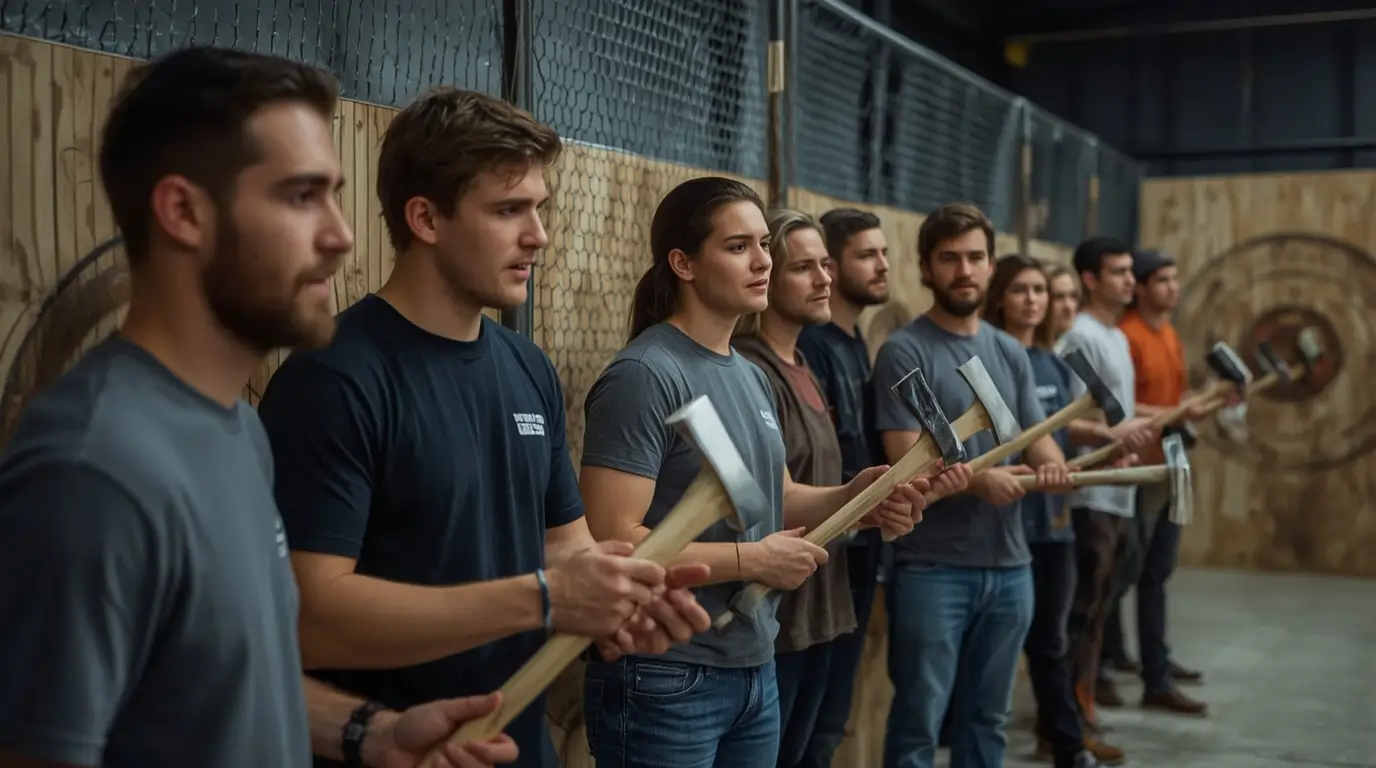
Introducing children to axe throwing is an extraordinary family adventure, combining tradition, precision and unique moments of sharing. Find out how to transform this age-old discipline into a safe and fulfilling family activity, suitable for even the youngest adventurers.
Essential prerequisites: age and maturity of children
How to introduce your children to axe throwing: a complete guide for parents 2 Minimum age and development requirements
L' axe throwing lessons for children requires a careful assessment of each child's physical and psychological maturity.
Eligibility criteria by age group :
8-10 years - Supervised initiation :
Motor development sufficient hand-eye coordinationUnderstanding ability to follow complex instructions.Attention Concentration maintained for at least 15-20 minutes.Respecting the rules obedience to absolute safety instructions.
11-13 years - Structured learning :
Physical strength Handling light axes (300-400 g).Liability Risk awareness and precautionsRelative autonomy supervised execution of technical movementsProgress Continuous improvement capability
14 years and over - Advanced training :
Maturity responsible decision-makingTechnical Learning the complete basics.Management : reduced but constant supervisionObjectives Developing precision and consistency.
Individual readiness assessment
Every child develops differently. L'activity children throw axes must be individually adapted:
Recommended preparation test :
Coordination Ability to throw a light object accurately.Listen to : immediate compliance with shutdown instructions.Patience Tolerance to waiting and repetitionEmotional management no anger when you fail
Absolute security: non-negotiable family protocols
Children and axe-throwing in complete safety: golden rules that can't be ignored
La child safety when throwing axes is the absolute priority, with no room for compromise.
The family safety protocol is essential before the session:
Before the session :
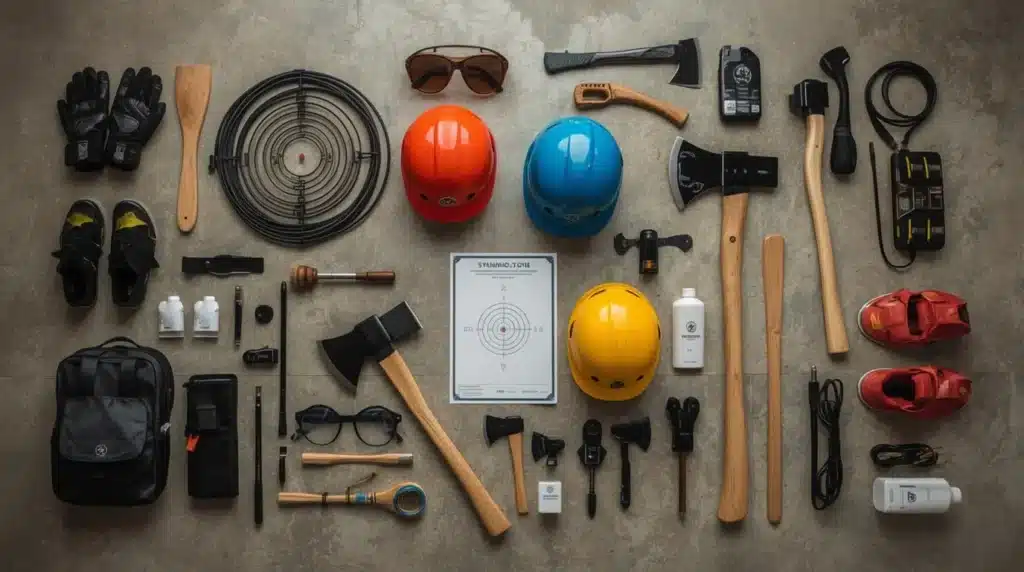
Checking the equipment: full inspection of axes and targetsEquipment for protection: helmets, gloves, closed shoes compulsory.Safety briefing clear explanation of potential hazardsComprehension test Q&A on the rulesWarm-up physical and mental preparation
During the activity :
Constant supervision A responsible adult at all times.Safe distances : zones demarcated and respectedIndividual throw Only one child in action at a time.Clear communication : established visual and audible signals.Regular breaks to avoid fatigue and loss of concentration.
After each throw :
Supervised recovery Adult is always with you.Checking equipment Checking the condition of axes after useTechnical debriefing constructive gesture analysisPositive encouragement confidence-building
Layout of the secure area
Family launch zone :
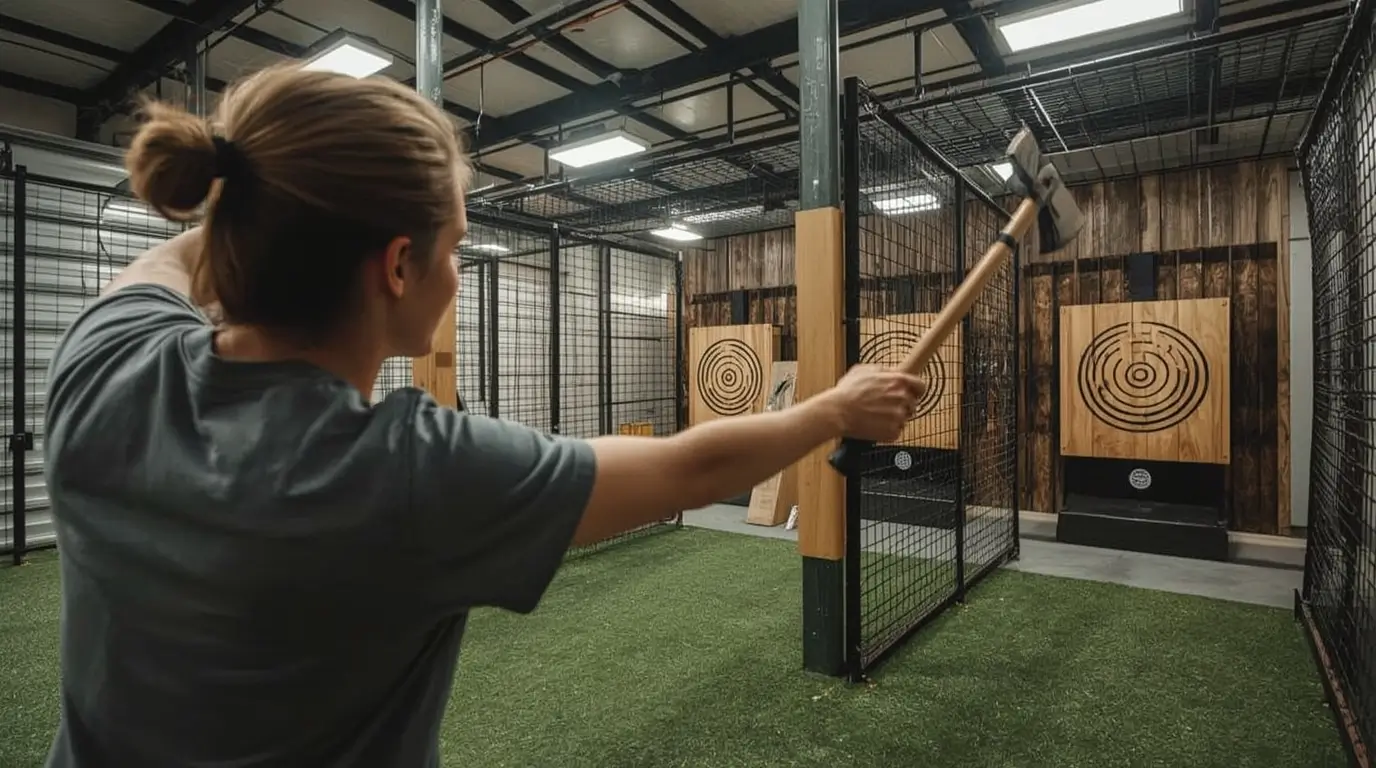
Reduced distance 3-4 metres maximum to start withPhysical barriers clear demarcation of danger zonesStable soil non-slip, uniform surfaceOptimum visibility sufficient lighting and absence of shadowsSide clearance 3 metres minimum on each side
Equipment adapted to young pitchers
Children's axe throwing equipment: specialist equipment
L'equipment throw children's axes differs fundamentally from adult material.
Specialised junior axes :
Technical specifications for children :
Optimised weight 300-500 g depending on age and strengthShortened handle Height: 25-30 cm for a good grip.Special balancing Adjusted centre of gravityEnhanced security less sharp blades, added protectionMaterials Quality wood with non-slip grip
Trends by age :
8-10 years foam or wooden axes 300 g maximum11-13 years : 400 g lightweight metal axes with protective coversAges 14+: progression towards lightweight standard equipment
Essential protective equipment
Full personal protection :
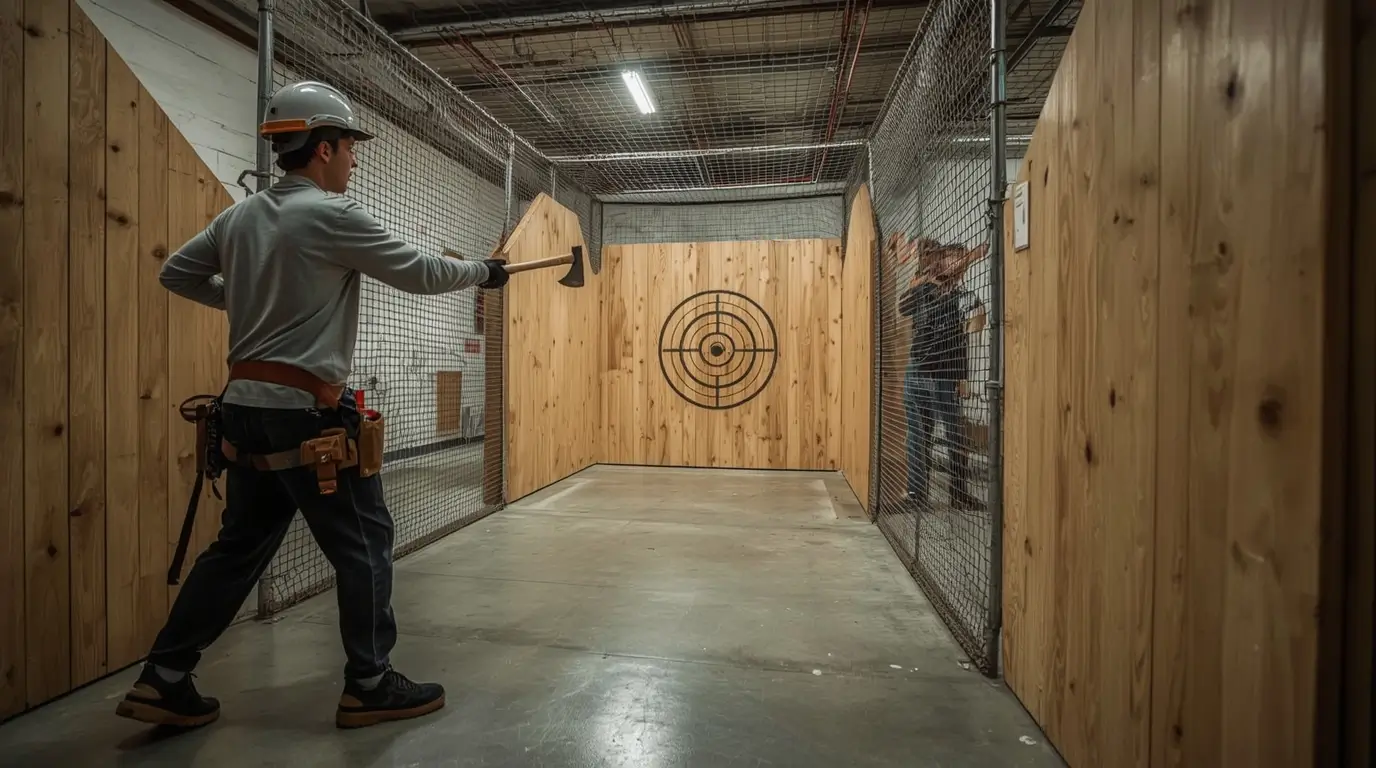
Helmet Mandatory head protection with chin strap.Reinforced gloves Optimum grip and hand protectionGlasses safety: eye protection against splashesSafety footwear : risers with protective shellFitted clothing avoid dangerous floating objects
Collective protection :
Protective nets barriers around the throwing areaSignage panels s: visual reminders of instructionsFirst aid kit accessible and comprehensiveTelephone number emergency: rapid communication with emergency services.
Teaching methods adapted to children
Axe-throwing technique for children: gradual progression
La axe throwing technique for children follows a methodology specially designed for their development.
Stage 1 - Familiarisation (2-3 sessions) :
Static handling holding, examining and understanding the tool.Vacuum gestures repeating the movement without an axeGiant targets 50 cm+ targets to start withMinimum distance 2-3 metres for initial tests
Step 2. Controlled learning (4 to 6 sessions) :
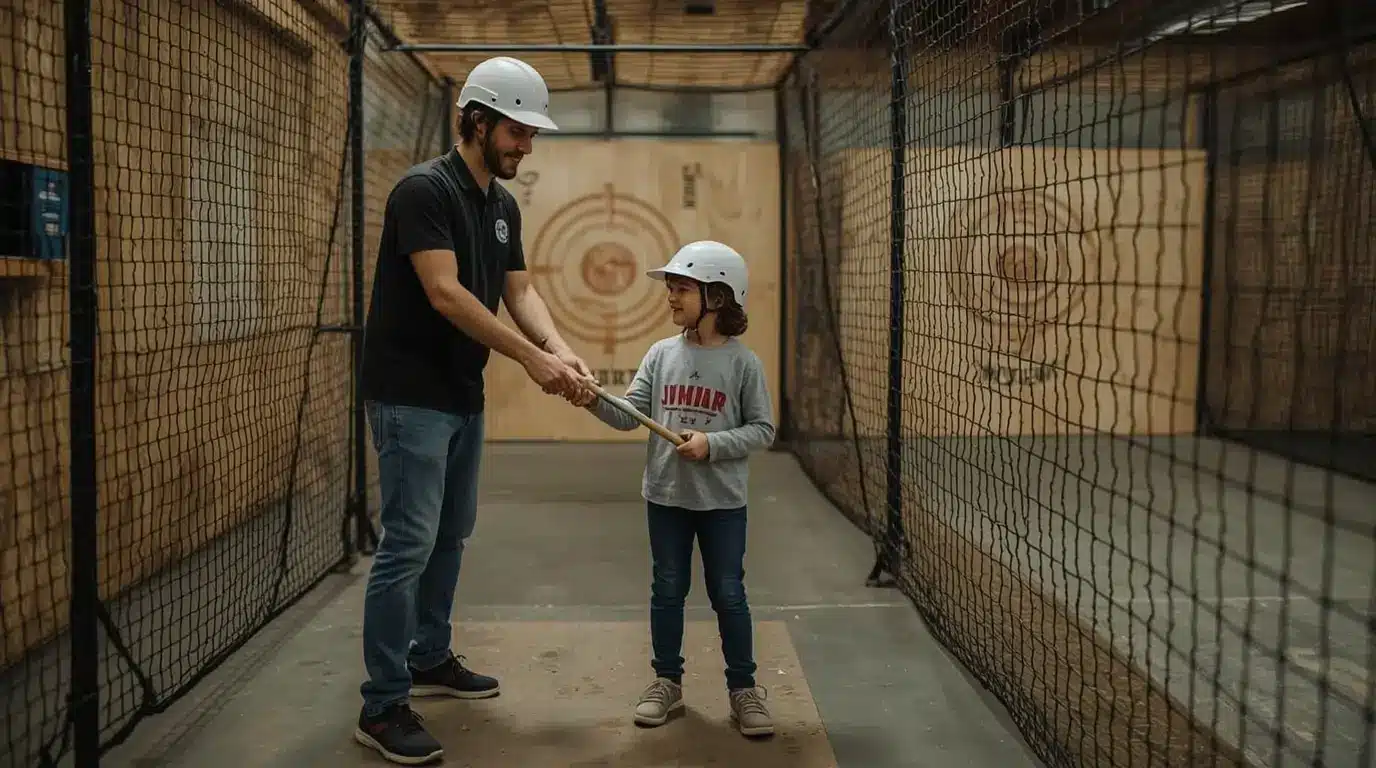
Assisted launch physical movement guidanceMedium targets gradual reduction to 30 cm.Standard distance progression towards 4 metresCustomised correction constant individual adjustments.
Stage 3 - Supervised autonomy (subsequent sessions) :
Independent launch under constant surveillanceStandard targets normal-sized lensesFurther training Work on regularity and precision.Fun challenges Games to keep you motivated
Positive teaching and encouragement
Family learning philosophy :
Celebrating progress every improvement recognised and congratulatedAccepting failure learning by doing without frustrationAdapted patience Respect for each child's individual rhythm.Priority fun pleasure before absolute performance.
Safe educational games and activities
Playful progression to maintain commitment
Introductory games level 1 :
"The magic target:
Principle coloured targets with variable dotsObjective The aim is to achieve specific colours according to the instructions.Learning precision and listening to instructionsSecurity One child at a time, total supervision.
"The progressive challenge:
Principle gradual reduction in target sizeObjective adapting precision to increasing difficultiesLearning perseverance and technical adaptationSecurity fixed distances, controlled equipment
Level 2 improvement games :
"The pitcher's route:
Principle Different stations with a variety of challengesObjective diversifying skills and maintaining interestLearning adaptability and technical progressSecurity reinforced supervision, demarcated zones
"Family competition:
Principle friendly tournament for parents and children with disabilitiesObjective sharing and positive emulationLearning sportsmanship and pressure managementSecurity strict rules, parental arbitration
A study by the European Family Sports Association shows that shared parent-child activities strengthen family ties by an average of 45 %.
Professional supervision and parent training
Supervising children throwing axes: essential expertise
L'supervising children throwing axes requires specialist skills that all parents need to acquire.
Parental training recommended:
Introductory session 2 hours of safety and technical trainingTeaching courses Adapting methods to children's agesFirst aid specialised emergency trainingSupervised practice Accompaniment by a certified instructor.
Specialist family centres :
Instructors trained : special certification for children/familiesAdapted equipment junior equipment and enhanced safetyDedicated programmes courses specially designed for familiesPersonalised follow-up Individual progress for each child
For comprehensive training, learning to throw axes
The benefits of axe throwing for child development
Positive impact on global development
Le axe throwing with the family offers exceptional benefits for children's development:
Physical development :
Motor coordination : improved gestural precisionMuscular strength harmonious upper body strengtheningBalance Proprioception and stability workEndurance developing cardiorespiratory capacity
Cognitive development :
Concentration : enhanced capacity for sustained attentionSpatial calculation distance and trajectory assessmentResolution of problems: analysing failures and making adjustmentsMemory storage : repeating gestures and integrating automatisms
Social and emotional development :
Self-confidence gradual success and recognitionManagement of frustration: accepting failure and perseveringRespect for rules: the importance of instructions and disciplineFamily sharing special moments for parents and children
Safe alternatives for younger children
Options adapted to age and maturity.
For ages 5-8 - Preparatory activities :
Giant darts:
Principle Velcro darts on giant targetsBenefits Developing safe precision.Progress Moving into more technical activities.Security zero risk, perfect fit
Adapted archery :
Principle Toy bows with foam arrowsBenefits Excellent hand-eye coordination.Progress axe-throwing: similar basicsSecurity minimum supervision required
For these alternative activities, family archery
For 8-12 year olds - Gradual transition :
Launching secure objects :
Principle foam or light wood axesBenefits Learning risk-free gestures.Progress : to semi-professional equipmentSecurity very limited risks
Organising successful family sessions
Optimised planning and logistics
Preparation for a typical session (2 h) :
Phase 1 - Preparation (20 min) :
Safety installation zone and equipment checkEquipment Protective dressing for all participantsBriefing session: a reminder of the rules and objectivesWarm-up fitness: fun physical preparation
Phase 2 - Learning (40 min) :
Demonstration: the parent demonstrates the correct gestures.Guided practice: the children try with assistance.Corrections : personalised technical adjustments.Incentives : valuing each step forward.
Phase 3 - Games (45 min) :
Fun activities Games adapted to your levelFamily challenges friendly competitionsRotation alternating to avoid fatigue.Shared moments s: discussions and advice.
Phase 4 - Conclusion (15 min) :
Secure storage : putting equipment back in placeDebriefing Looking back on the session and making progressPlanning schedule for the next sessionCelebration Recognition of everyone's efforts
Long-term progress and family goals
Building a family learning path
Objectives per quarter :
Term 1 - Discovery :
Familiarisation : ease with equipment and environmentSecurity automatic compliance with instructionsBasic technique fundamental gesture acquiredPleasure A desire to continue and progress.
Quarter 2 - Development :
Precision The new service: a significant improvement in regularity.Autonomy correct gestures without constant guidance.Variety adapting to different situationsTrust : confident movement
Term 3+ - Advanced :
Control Advanced techniques by ageTransmission: the children help the youngest/beginners.Competition participation in family events.Passion development of real personal interest.
Integration into family life
Enriched family rituals :
Weekly sessions regular family meetingsSpecial events : themed birthdays Active holidays integration during family holidaysGenerational transmission sharing with grandparents
Specialist centres and resources in Belgium
Selection of family-friendly establishments
Criteria for choosing a family centre :
Children's certification : instructors trained in teaching young peopleAdapted equipment Junior equipment availableSecure areas dedicated family zones with reinforced protectionFamily programmes : courses specially designed for parents and childrenFlexible working hours slots compatible with family schedules.
Additional services required :
Daycare : welcoming other children during sessionsCatering Family snacks available.Birthdays : organisation of themed eventsHoliday courses Specialised camps for children
Tips for keeping children motivated
Sustainable engagement strategies
Appropriate motivational techniques :
Rewards system progress badges and symbolic trophiesDocumenting progress Click here for photos and videos to see the progress.Social sharing Showing off your achievements to your extended family and friends.Variety of activities Avoid routine by diversifying games.
Managing difficulties :
Learning trays Acceptance of phases of stagnationFrustration Emotional management techniquesComparisons avoiding competition between brothers and sistersExcessive pressure Keeping the fun aspect a priority.
Conclusion: building unforgettable family memories
Introducing children to axe throwing transcends the simple transmission of a sporting technique. This family adventure forges genuine bonds, develops mutual trust and creates lasting memories.
L' axe throwing lessons for children in a safe and caring environment offers your children much more than just a new skill. It's a life lesson in perseverance, respect for rules and the joy of surpassing oneself.
Throwing axes in family becomes a precious legacy, passing on values, patience and a love of the challenge to the next generation. Each shared throw strengthens the family bond and builds the personality of your children.
Are you ready to give your children this extraordinary adventure that will leave a lasting impression on their childhood?