🍪 This website uses analytics cookies to improve your experience.
Find out more
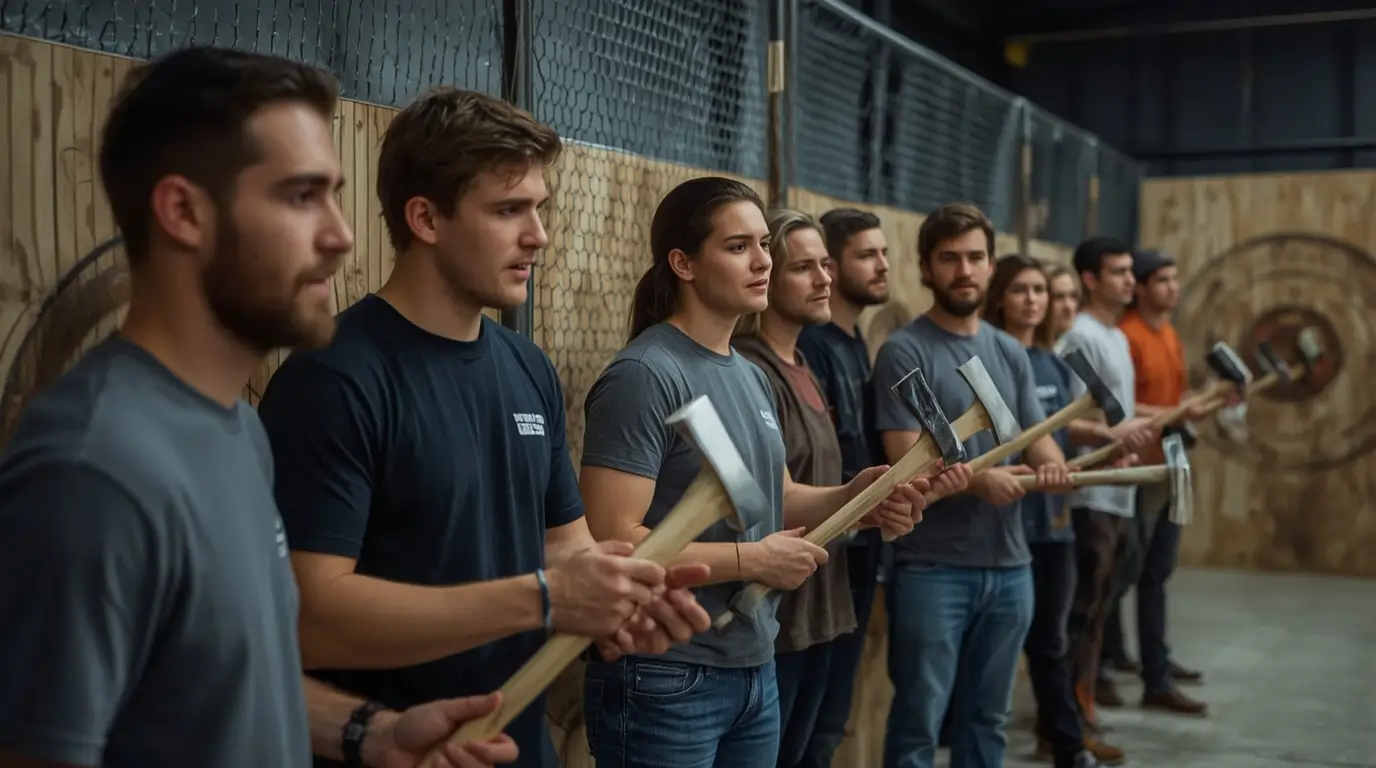
What are the most effective techniques for holding and throwing an axe with precision?
Master effective techniques for throwing axe with precision is the difference between an amateur and a true expert. Discover the professionals' secrets for turning every throw into a master stroke: optimal posture, perfect grip, millimetre coordination and targeted training. Your accuracy will literally explode!
Grip fundamentals: the perfect grip
What are the most effective techniques for holding and throwing an axe with precision? 2
How to hold the axe and throw it expertly.
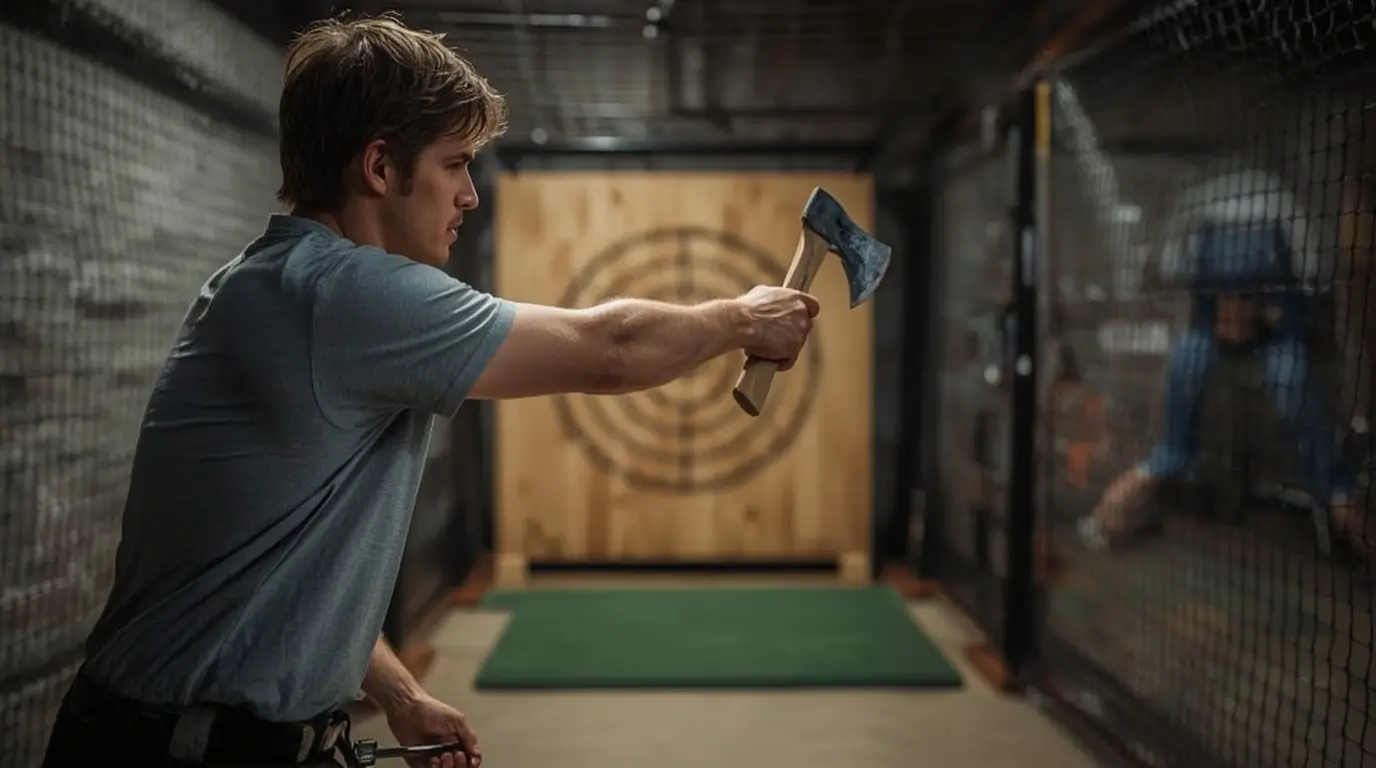
The axe for cuttingutants starts with mastering the grip. This will determine 70 % of your future success.
Optimum hand position :
Dominant hand placed 15-20 cm from the axe head
Thumb pressure firmly wrapped around the handle
Fingers evenly distributed for maximum control
Wrist slightly bent backwards
Grip variations according to level:
Beginners - Safety grip :
Two hands on the neck for greater control.
4 metres from target
Lightweight axes (450-600 g)
Focus on consistency rather than power.
Intermediate - One-handed grip :
Dominant hand only
Distance of 4-5 metres
Standard axes (600-800 g)
Developing precision
Experts - Advanced grip :
Variations in grip depending on distance
Heavy axes (800 g-1.3 kg)
Variable distances (4-6 metres)
Specialised techniques (double throw, etc.)
Choosing the right axe for you
Your equipment has a direct influence on your accuracy when throwing axe. Select according to these criteria :
Optimum weight :
Women/Beginners : 450-600 g
Men/Intermediates : 600-900 g
Confirmed experts 900 g-1.3 kg
Handle length :
Standard 35-40 cm (versatile)
Short 30-35 cm (maximum control)
Long 40-45 cm (increased power)
Posture and body position: the art of perfect alignment
Axe-throwing body position: the basis of everything
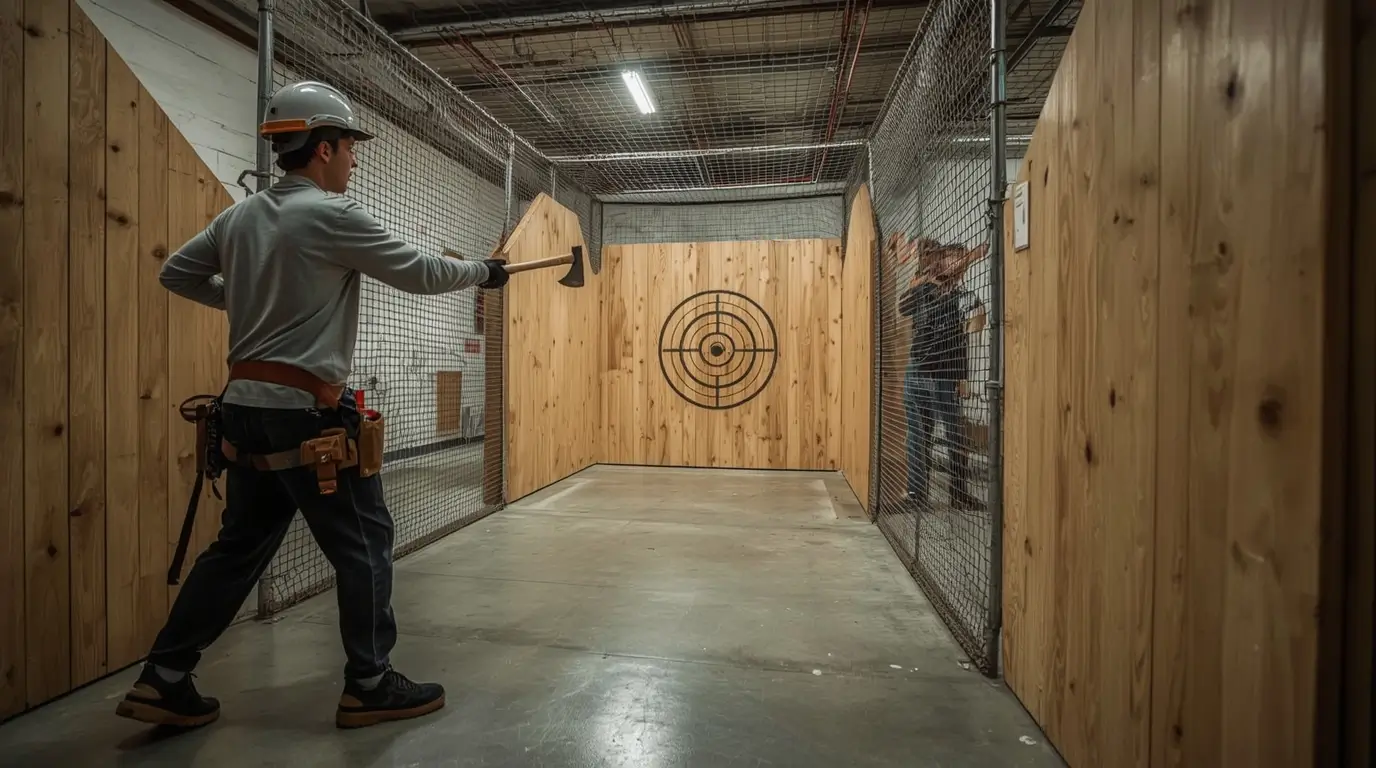
A axe-throwing stance is the foundation of your precision. Every detail counts.
Foot positioning :
Spacing Exact shoulder width
Dominant foot aligned with the target
Rear foot 10-15 cm to the rear
Weight distribution 60 % on front foot, 40 % on rear foot
Knee bend Lightweight for dynamic balance
Bust alignment :
Shoulders parallel to the target line
Hip slightly towards the target
Spinal column straight but relaxed
Look fixed on the desired point of impact
Arm position :
Launcher arm Relaxed along the body
Free arm slightly apart for balance
Elbow close to the body during the army
Shoulder Casual for fluidity
Avoid fatal postural errors
Defects in axe-throwing body position instantly sabotage your precision:
Common mistakes :
Misaligned feet systematic lateral dispersal
Tense shoulders loss of fluidity and power
Scattered gaze Impossible to aim correctly.
Imbalance Unstable and unpredictable throws
Excessive voltage premature fatigue and inaccuracy
Throwing technique: the millimetre gesture
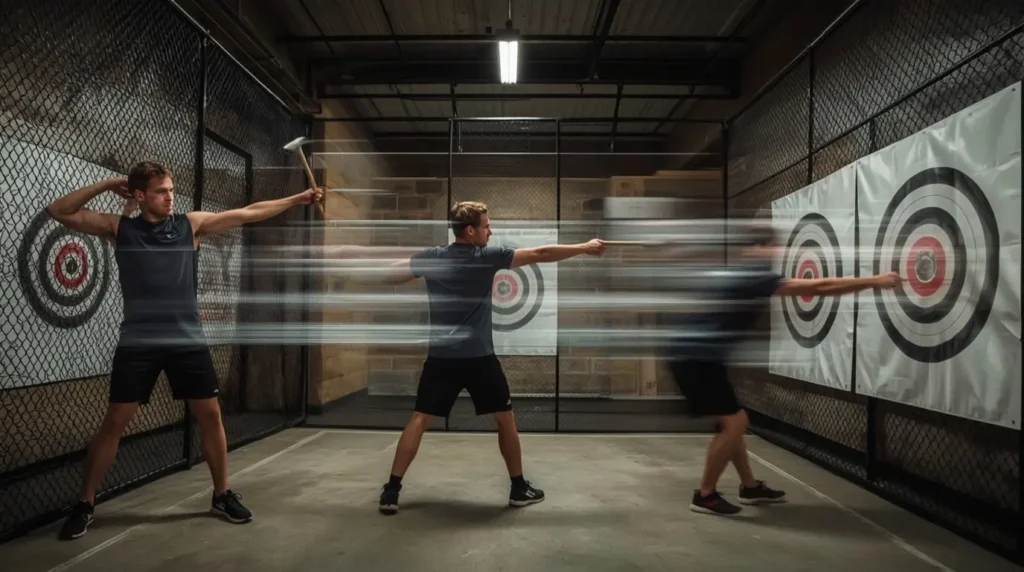
Decomposition of perfect motion
La beginner axe throwing technique is broken down into precise phases. Each stage must be mastered individually.
Phase 1 Backswing) :
Controlled elevation axe raised above the shoulder
Elbow close to the body maximum stability
A look at the target intense concentration.
Deep breathing optimal oxygenation
Phase 2 Downswing :
Hip rotation power generation
Arm extension gradual acceleration
Wrist whip final precision
Release point perfect timing
Phase 3 - Follow-through :
Arm extended towards target: direction maintained.
Balance maintained post-launch stability
Accompanying gaze trajectory analysis
Relaxation recovery for the next launch.
Timing and coordination: the symphony of movement
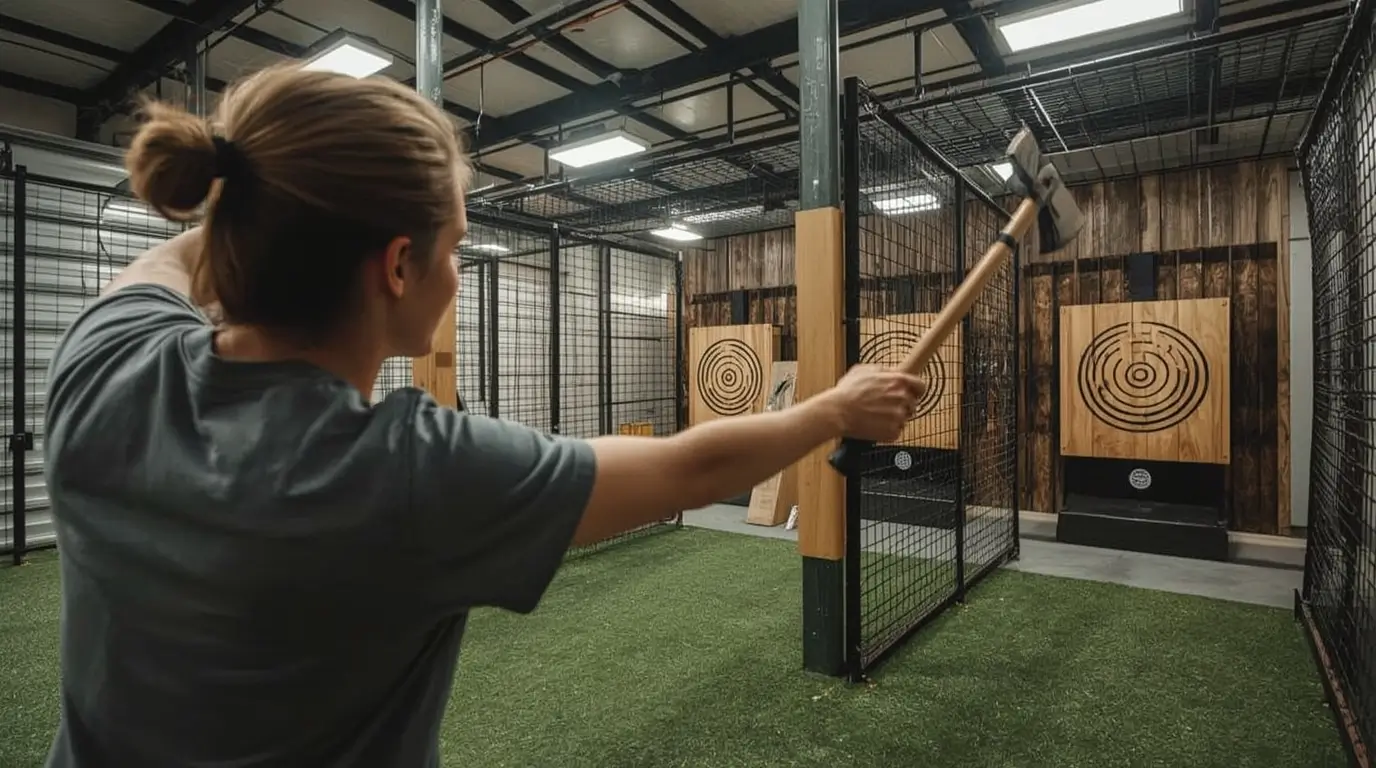
La axe throwing coordination synchronises all elements :
Perfect synchronisation :
Hips : get the ball rolling
Shoulders follow the rotation
Arm : extending the acceleration
Wrist the management concludes.
Release : at the optimum time
This coordination takes hours of practice to become natural. The axe throwing in a professional centre speeds up the learning process considerably.
Specialised training programme for precision
Axe throwing training: methodical progression
A training throw axe guarantees constant, measurable progress.
Week 1-2: Fundamentals
Sessions 3 x a week, 45 minutes.
Focus posture, grip, slow movement
Distance 3-4 metres only
Objective 50 % success rate on target
Week 3-4: Regularity
Sessions 3 x per week, 60 minutes
Focus repeatability of gesture
Distance : 4 metres standard
Objective 70 % success rate on target
Week 5-8: Precision
Sessions 4 x per week, 75 minutes.
Focus Specific areas of the target
Distance : 4-5 metres variable
Objective 80 % of success, specific areas
Week 9 +: Expertise
Sessions: 4-5 x per week, 90 minutes.
Focus advanced techniques
Distance : 4-6 metres controlled
Objective : 90 %+ of success, competitions.
Specific development exercises
Exercise 1 - Static visualisation :
10 minutes of daily mental visualisation
Imagine the perfect throw in detail.
Memorising the best movements
Exercise 2 - No-load movements :
50 repetitions without axe
Focus on fluidity and timing.
Correction of technical faults
Exercise 3 - Precision throwing :
Smaller and smaller targets
Specific marked areas
Millimetre progress
Exercise 4 - Technical endurance :
Extended sessions (100 + throws)
Maintaining precision despite fatigue
Specific muscle strengthening
Strength and coordination: the winning duo
Targeted muscle development
La axe throwing coordination requires specific muscle strengthening:
Priority muscles :
Deltoids shoulder stabilisation
Larger dorsal traction power
Triceps explosive expansion
Forearm grip and fine control
Abs sheathing and transmission
Buttocks anchoring and balance
Strengthening programme (3x/week) :
Upper body :
Weighted pull-ups: 3 x 8-12
Military press: 3 x 10-15
Rowing bar: 3 x 10-12
Hammer curls: 3 x 12-15
Sheathing and stability :
Dynamic boards: 3 x 30-60 secs.
Russian rotations: 3 x 20
Dead bugs: 3 x 10 each side.
Bird dogs: 3 x 10 each side.
Advanced neuromuscular coordination
Coordination exercises :
Juggling Developing hand-eye coordination.
Balancing board Improves proprioception.
Cross exercises bilateral synchronisation
Yoga/Tai-chi fluidity and control
Concentration and optimal mental state
Axe-throwing concentration: the secret weapon
The mental dimension accounts for 40 % of your performance in precision throwing of axe.
Concentration techniques :
Controlled breathing :
Deep breath (4 seconds)
Retention (4 seconds)
Slow exhalation (6 seconds)
Apply before each throw.
Active display :
Imagining the perfect trajectory
See the axe strike the target.
Feel the ideal movement
Programming success mentally
Pre-launch routine :
Identical positioning
Calibrated breathing
Quick view
Smooth running
Managing distractions :
Identifying disruptors
Rapid refocusing techniques
Creating a concentration bubble
Adaptation to changing environments
Psychology of performance
Pressure management :
Acceptance of imperfection
Focus on the process, not the result.
Celebrating incremental progress
Building trust step by step
A study by theResearch institute in sports performance confirms that athletes using mental techniques improve their accuracy by an average of 23 %.
Fatal technical errors and corrections
The 7 mistakes that ruin your precision
1. Grip too tight or too loose
Symptom unpredictable pitches
Correction Firm but relaxed grip.
Test To be able to move the axe slightly.
2. Precipitous movement
Symptom lack of control
Correction slowing down the movement
Focus fluidity before speed
3. Incorrect release
Symptom axe gone wrong
Correction Release timing
Training repetition of the empty gesture
4. Scattered gaze
Symptom general inaccuracy
Correction Fixing a precise point
Technical score a point on the target
5. Unstable posture
Symptom variable throws
Correction Strengthening your core
Exercises boards and balance
6. Excessive voltage
Symptom rapid fatigue, inaccuracy.
Correction progressive relaxation
Technical Relaxation between throws
7. Lack of routine
Symptom inconsistency
Correction developing a ritual
Application The same sequence each time.
Progression and performance assessment
Progress metrics
Quantitative indicators :
Target success rate Monthly growth
Zonal precision Refining the areas affected
Regularity standard deviation of performance
Endurance maintaining precision over time
Qualitative indicators :
Fluidity of movement video evaluation
Confidence Self-assessment
Stress management : performance in situation
Adaptability : change of conditions
Recommended training log
Daily monitoring :
Date and duration of session
Number of throws made
Pass rates by series
Sensations and observations
Areas for improvement identified
Objectives for the next session
Advanced equipment and safety
Recommended professional equipment
Certified axes :
Recognised brands (WATL approved)
Verified professional balance
Regular blade maintenance
Rotate material for uniformity
Protective equipment :
Safety shoes compulsory
Appropriate gloves according to preference.
Eye protection if necessary.
Tight-fitting garments without floaters.
Safety and best practice
Security protocols :
Pre-session equipment check
Respecting safety zones
Supervision for beginners
Known emergency procedures
For complete, safe training, the’group training offer an optimal setting with professional supervision.
Adapting to different contexts
Indoor versus outdoor throwing
Indoor specificities :
Controlled, optimum lighting
No wind disturbance
Stable temperature
Uniform, safe floor
Outdoor adaptations :
Side/front wind management
Variable light adaptation
Compensation for uneven ground
Protection against the elements
Competition and performance
Competitive preparation :
Training under pressure
Simulation of competition conditions
Managing the public and distractions
Rapid recovery strategies
Competitor's mentality :
Accepting constructive failure
Focus on his own performance.
Respect for opponents
Enjoyment maintained despite what's at stake
Conclusion: master the age-old art of precise throwing
The effective axe-throwing techniquesion combines modern science with traditional know-how. Every element - from the technical axe grip to the axe throw coordination - contributes to your excellence.
True mastery requires patience, perseverance and intelligent practice. Your axe-throwing training should be progressive, methodical and adapted to your level. Positions axe throwing body and axe-throwing stance become natural over time.
Never forget that behind every expert are thousands of hours of dedicated training. Whether for pleasure or competition, these techniques will lead you to excellence.
Your next axe is waiting for you. Are you ready to transform your precision and join the elite of expert throwers?