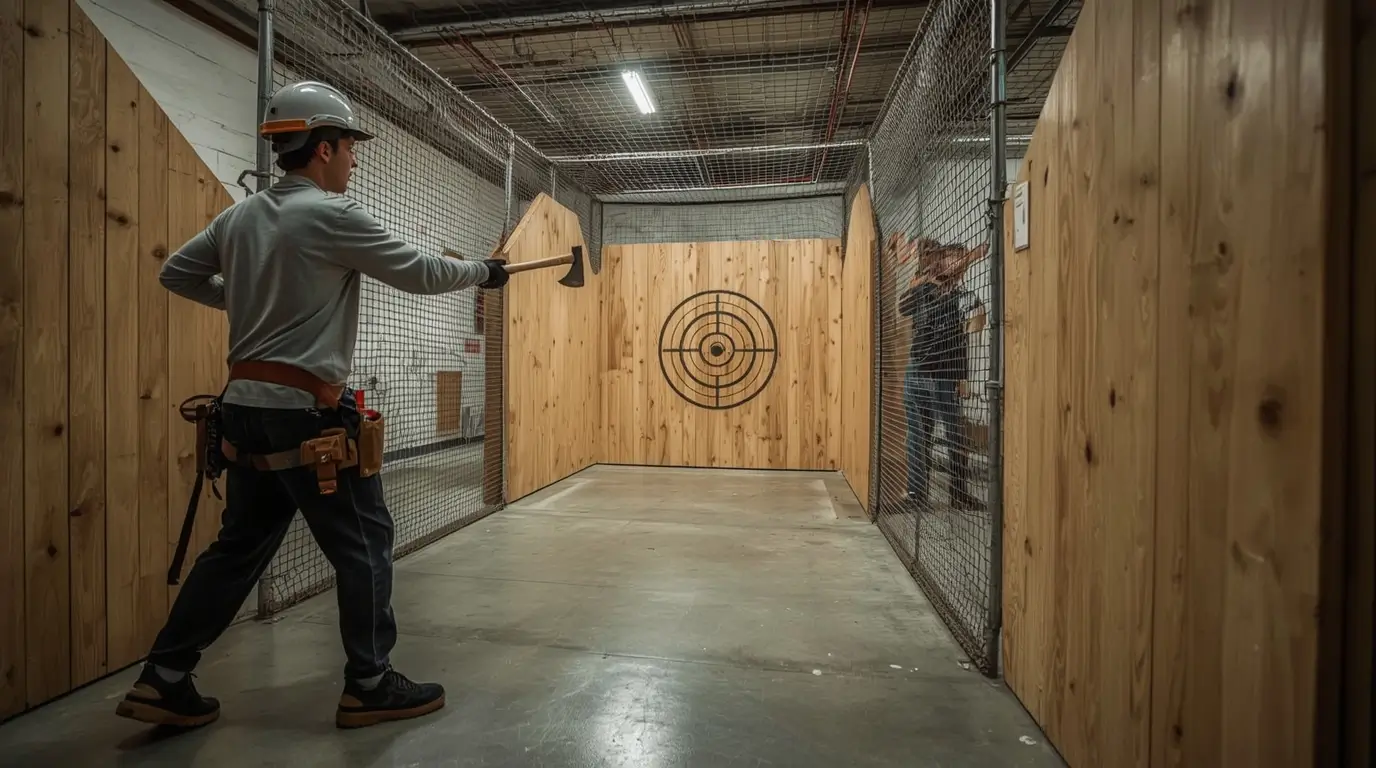
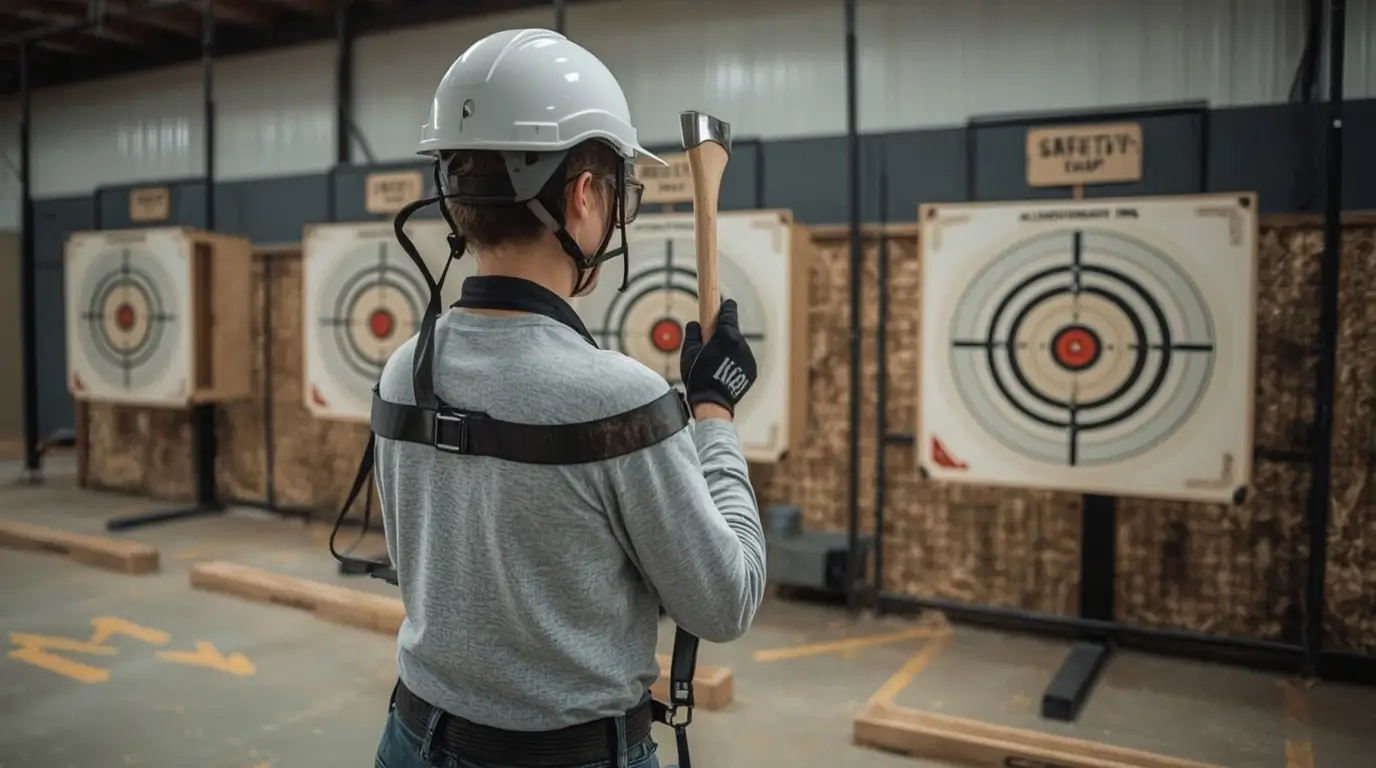
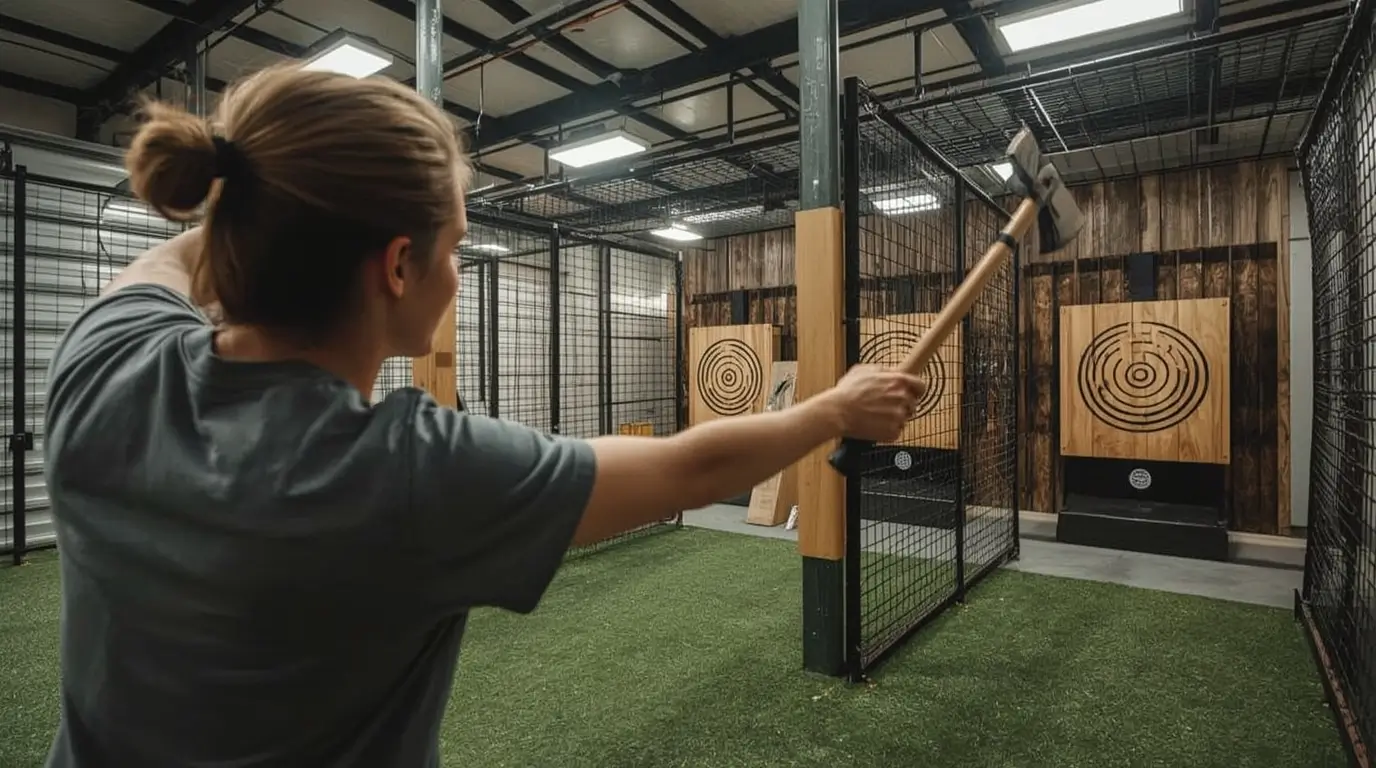
La protection launch of Axe throwing is not optional: it's a matter of life and death! Find out why essential axe-throwing safety equipment is revolutionising this discipline and transforming a risky activity into safe fun. From strict regulations to technological innovations, delve into the fascinating world of axe-throwing safety by Belgium .
The vital imperative: protection when throwing axes is paramount.
Why is safety equipment essential when throwing axes? 2 The vital imperative: protection when throwing axes is paramount.
Why safety is more important than anything else
Le axe throwing combines power, precision and adrenalin in a potentially explosive cocktail. Without protective equipment and throw axes This age-old activity is being transformed into modern Russian roulette.
Alarming statistics without protection :
78 % of accidents occur without suitable equipment.Serious injuries : 23 % require hospitalisationAreas affected hands (34 %), eyes (28 %), feet (21 %), head (17 %)Average medical cost: €2,847 per avoidable accident
Psychological impact of accidents :
Lasting trauma in 67 % of victims
Permanent abandonment of the business: 45 % of cases
Developed phobia: 23 % control participants
Widespread loss of confidence in leisure activities
Historical development of safety
L'history of protection in axe-throwing reveals a gradual but decisive awareness of the evolution of safety.
Primitive era (before 1990): period without standardised protection.
No standardised protection
Frequent and serious accidents
Practice reserved for experts
Exclusive individual liability
Security revolution (1990-2010):
First industrial standards
Specialised PPE development
Emerging professional centres
Compulsory insurance
Modern era (2010-present) :
Integrated cutting-edge technologies
Harmonised international standards
Systematic proactive prevention
Continuous innovation in materials
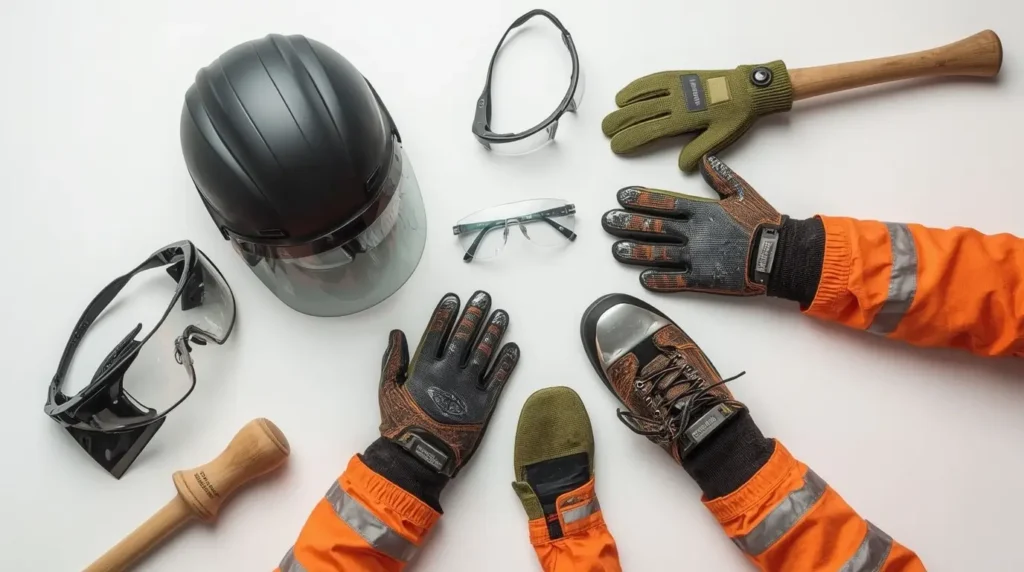
Protective arsenal: essential axe-throwing protective equipment.
1. head protection: axe-throwing helmet
The helmet of axe throwing protection is the first line of defence against projectiles and falls.
Professional technical specifications :
EN 397 standard Impact resistance 5 joules minimumMaterial ABS high density or polycarbonateShock absorption Multi-density foam interiorVentilation 6-8 ports, optimal positioningAdjustment Adjustable head strap 52-64 cmWeight 300-400 g for extended comfort
Integrated advanced technologies :
Anti-scratch coating : longevity of the visorAnti-fog treatment permanent visibilityQuick-release system emergency withdrawalImpact indicator : Invisible shock detection
Critical protection zones :
Front direct impact projectilesTemporal Lateral ricochetsOccipital Rear fallsFacial : Splinters and debris
2. Eye protection: preserving vision
The safety glasses protect the most precious and vulnerable organ.
Technical specifications :
Standard EN 166 Class F impact resistancePolycarbonate lenses 10 x more resistant than glassUV treatment 99.9 % UV-A and UV-B protectionField of vision 180° without deformationPermanent anti-fog nanotechnology coating
Specialised options available:
Photochromic lenses automatic adjustment to brightnessSide protection integrated shieldsCompatibility simultaneous use with headphonesRequirements adaptation of corrective lenses
3. Hand protection: high-performance gloves
The protective gloves combine dexterity with maximum safety.
Cutting-edge technologies :
Cut-off level 5 Maximum resistance EN 388Reinforced palm synthetic leather gripBreathable back : Mesh evacuation techniqueLong sleeves forearm protectionTouch system screen compatible
Revolutionary materials :
HPPE fibre High Performance PolyethyleneNitrile coating Optimum gripCoolmax lining thermal controlReinforced seams Kevlar 5 threads
4. Foot protection: safety shoes
The safety footwear These specialised techniques anchor the practitioner in complete confidence.
Mandatory specifications :
EN ISO 20345 standard European standardComposite tip 200 joules of resistanceAnti-puncture sole : nail and splinter protectionSRC grip dry and moist soilHigh uppers Ankle protection
Technological innovations :
Cushioning sole gel or memory foamBreathable materials Gore-Tex membraneAntistatic properties evacuation ofErgonomic design : Comfort 8 + hours
5. body protection: technical clothing
The protective clothing complete the full security arsenal.
Specialised technical jacket :
Long sleeves compulsory full arm protection.Resistant material 300 g/m² cotton twillSecure closures reinforced VelcroHigh-visibility colours orange/fluorescent yellowErgonomic cuts freedom of movement
Protective trousers :
Legs fully covered No exposed skin.Integrated knee pads joint protectionReflective strips visibility in poor conditionsSecure pockets : watertight closures
Standards and regulations: axe throwing safety in Belgium
Belgian and European legal framework
La safety axe throwing belgium is supported by a comprehensive and binding legal arsenal.
Applicable national regulations :
Workplace well-being code Articles 25-47 PPERoyal Decree of 13 June 2005 PPE use mandatoryNBN EN 397+A1 standard : Industrial safety helmetsDirective 89/686/EEC CE marking mandatory
Defined legal responsibilities :
Centre operators : Supply of certified PPEInstructors correct port checkParticipants To be used in accordance with the instructions.Insurers : Workplace accident cover
Certifications and approvals
Recognised certification bodies :
BELAC Accreditation of Belgian laboratoriesKIWA : Safety product certificationTÜV Rheinland European conformity testsSGS : international quality controls
Compulsory markings :
CE : European conformityEN Standard technical specificationProtection class resistance levelDate of manufacture time tracking
Controls and penalties
Regular inspections include annual surprise checks carried out by the FPS Employment.
FPS Employment annual surprise checksInsurance Checking conditionsApproved bodies : Safety auditsUser complaints immediate investigations
Penalties incurred :
Administrative fines : 200-2000 €Temporary closure 15 days to 6 monthsWithdrawal of authorisation : definitive in serious casesCriminal liability Serious accidents
A study by theEuropean Agency for Safety and Health at Work confirms that strict compliance with these standards reduces accidents by 89 %.
accident prevention : accident prevention systematic axe throwing
Analysis of risks and critical points
Preventing accidents when throwing axes requires the precise identification of hazards and the implementation of multiple barriers.
Types of risks identified :
Primary risks (related to throwing) :
Deviated trajectory poor technique, fatigueUnpredictable rebound : inadequate target surfacePremature release insufficient grip, sweatingOver-rotation distance miscalculated
Secondary (environmental) risks :
Peripheral obstacles furniture, spectatorsSlippery floor moisture, sawdustInsufficient lighting Reduced visibilityAmbient noise : disrupted communication
Tertiary risks (human) :
Physical fatigue reduced concentrationAlcohol/substances impaired reflexesEmotional stress Performance pressureOverconfidence progressive neglect
Advanced prevention methods
5-level prevention system:
Level 1 - Elimination of danger :
Design of secure installations
Optimised throwing zones
Suitable target materials
Automatic evacuation of risk areas
Level 2 - Risk substitution :
Safety axes for beginners
Fixed replaced moving targets
Distances adapted to level
Non-slip surfaces
Level 3 - Technical inspections :
Permanent physical barriers
Audible warning systems
Optimised directional lighting
Exhaust air ventilation
Level 4 - Administrative controls :
Strict supervision procedures
Compulsory training for participants
Regular rotation of activities
Continuous supervision
Level 5 Equipment for protection :
Epi, throwing, axes, complete.Systematic checks
Preventive maintenance
Scheduled renewal
technological innovation: revolutionary chopped safety equipment
Emerging protection technologies
Safety equipment axes is constantly evolving thanks to cutting-edge technological innovations.
Integrated intelligent sensors :
Impact detectors : violent impact alertGyroscopes analysis of abnormal trajectoriesAccelerometers force measurement GReal-time transmission centralised monitoring
Revolutionary materials :
Aerogel Extreme thermal insulationGraphene ultimate mechanical strengthAramid fibres lightness and protectionSelf-repairing polymers enhanced durability
Advanced warning systems :
Facial recognition automatic identificationArtificial vision detecting risky behaviourPredictive intelligence anticipating accidentsAugmented reality real-time safety guidance
Promising future developments
Horizon 2025-2030 :
Integral combinations total body protectionLightweight exoskeletons gesture assistanceSafety holograms virtual zonesContinuous biometrics monitoring physical condition
To see these innovations in action, the’professional axe-throwing experience
training and awareness: safety culture
Compulsory training programmes
Beginners' course:
Module 1 Risks and consequences (30 min)Module 2 Equipment and use (45 min)Module 3 Emergency procedures (15 min)Practical assessment demonstration acquired.
Certified instructor training :
40 hours of theory safety, education and regulations.60 practical hours Supervised supervisionFinal examination official certification.Annual refresher course Skills update
Ongoing awareness-raising :
Daily briefings safety remindersIncident analysis feedbackSafety challenges : gamification preventionVisual communication : Modern signage
Emergency management
Intervention protocols :
First aid compulsory SST trainingEvacuation : defined procedures testedCrisis communication Alert chainsPost-incident debriefing and improvement
Centre liability: legal obligations
Duties of professional operators
Fundamental obligations :
PPE supply free and adaptedUser training Theoretical and practical.Equipment maintenance : preventive and curativeDocumentation complete traceability
Quality control :
Daily inspections compulsory checklistsPeriodic tests strength and functionalityExternal audits certified organisationsRenewal according to manufacturer's recommendations.
Participation in secure team building events
the economics of safety: a profitable investment
Protection cost-benefit analysis
Direct protection costs :
Individual equipment 150-300 €/personAnnual maintenance 20 % of the initial valueStaff training 500/instructorCertifications 200/year/centre
Savings generated :
Reducing accidents -89 % of incidentsInsurance premiums 40 % average costStopping work -95 % of interruptionsBrand image : +67 % customer confidence
Return on investment :
Break-even point: 8 months' sales exploitationNet annual earnings 2.3 x initial investmentAdded value competitive differentiationDurability economic sustainability guaranteed
psychological aspects: confidence and performance
Psychological impact of safety
Measurable mental benefits :
Reduced stress 45 % of cortisol in participantsIncreased confidence : +78 % gesture assuranceAmplified pleasure : +56 % in overall satisfactionLoyalty : +89 % customer returns
Virtuous circle of safety :
Protection → Trust → Performance → Pleasure → Loyalty → Recommendations
To benefit from this peace of mind, the secure birthday celebrations
Conclusion: safety synonymous with excellence
The safety equipment launched by essential axes is not a constraint, but a passport to excellence. Visit axe throwing protection is revolutionising this age-old discipline by transforming it into a modern, accessible and safe activity.
The safety standards for axe throwing and ears of axes The professional equipment ensures that each participant can explore his or her limits in complete confidence. Safety equipment axes combines technological innovation with proven efficiency.
Preventing accidents by throwing axes systematic and safe throwing of axes in Belgi These exemplary solutions position our country as the European benchmark for safe leisure activities.
L' axe throwing protective equipment and the axe throwing protection are no longer options, but self-evident for any responsible practitioner.
Ready to discover axe throwing in the safest possible conditions and enjoy an unforgettable experience without any risk?